
Trekking poles are one of the simplest pieces of hiking gear—and one of the most commonly misused.
On real trails, we see the same patterns over and over again. Most problems hikers experience with trekking poles don’t come from the poles themselves, but from small technique and setup mistakes that quietly add fatigue, reduce stability, or limit the benefits poles are supposed to provide. These issues often go unnoticed on short hikes, then show up later as sore shoulders, tired wrists, or knee discomfort on longer days.
If you’re looking for a complete, step-by-step explanation of correct setup and movement patterns, start with our main guide on How to Use Trekking Poles Properly.
This article focuses on the other side of the equation: the most common mistakes hikers make—and how to fix them.
Setting Trekking Poles to One Fixed Length
The mistake
Many hikers set their pole length once at the trailhead and never adjust it again.
Why it matters
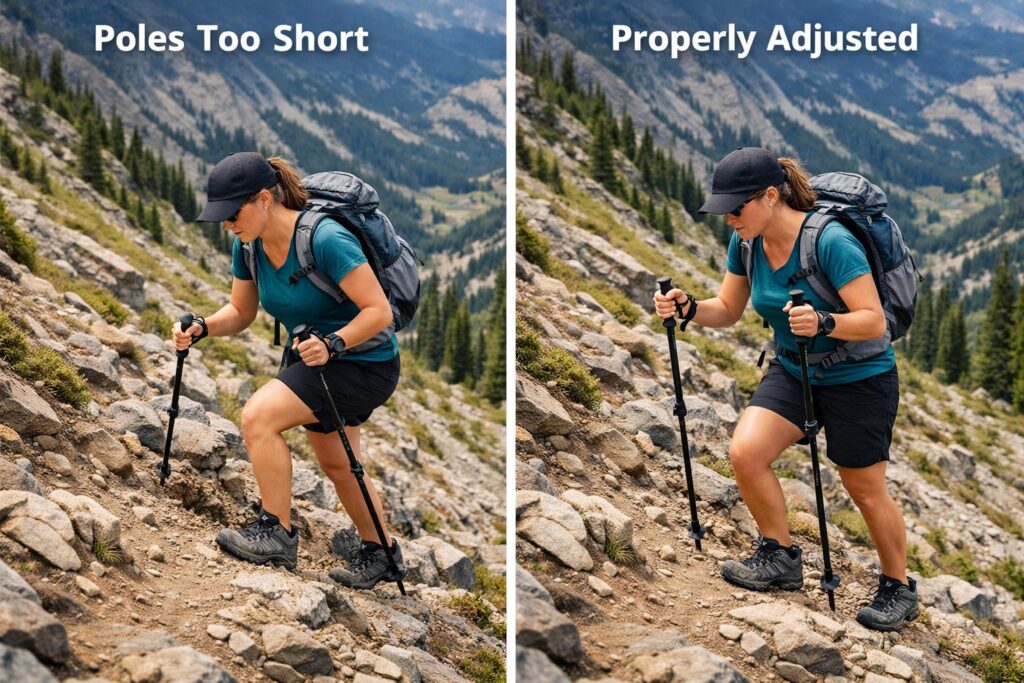
Trail terrain changes constantly. A length that feels fine on flat ground quickly becomes inefficient on climbs and limiting on descents.
Poles that are too long uphill raise your shoulders and reduce power transfer
- Poles that are too short downhill reduce stability and increase knee load, especially on longer descents.
We often see this on popular downhill sections late in the day, when fatigue makes small setup issues feel much bigger.
How to avoid it
Treat pole length as a variable, not a fixed setting.
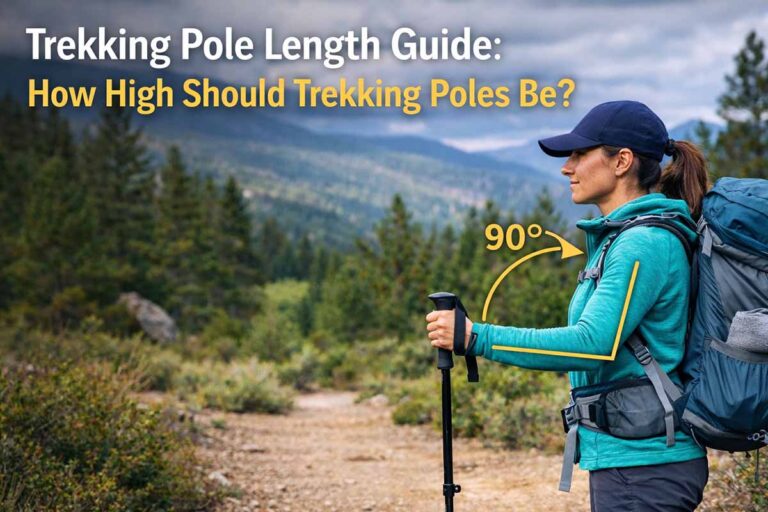
- Flat terrain: elbows near a 90-degree bend
- Uphill: shorten poles slightly
- Downhill: lengthen poles slightly
For height-based starting points and terrain-specific adjustments, we break this down in detail in our Trekking Pole Length Guide.
Using Trekking Poles Like Canes
The mistake
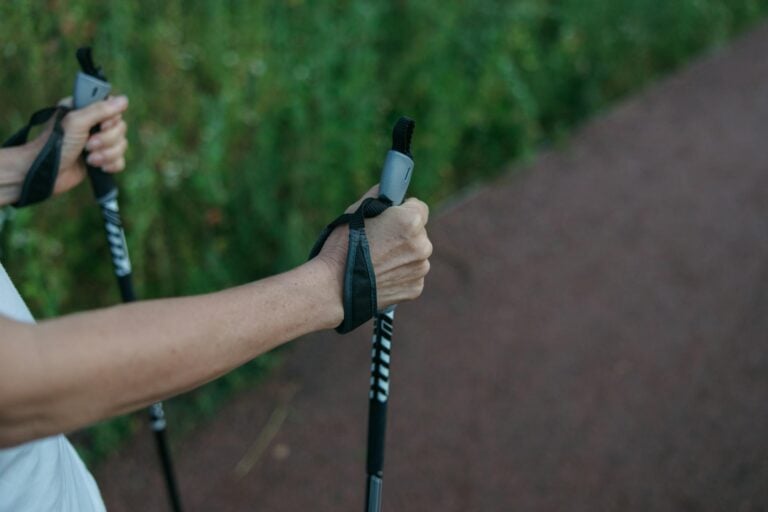
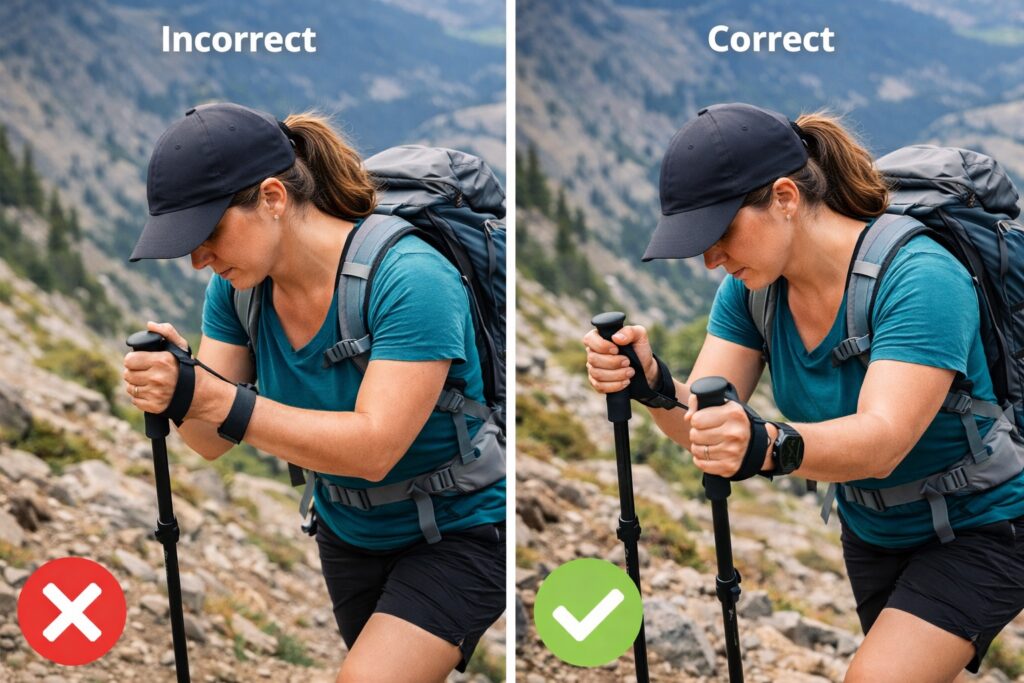
Either not using wrist straps at all, or slipping hands through from the top and gripping tightly.
Why it matters
When used correctly, straps transfer load through the wrist, reducing grip fatigue. When used incorrectly, they force you to over-grip the handle—something many hikers only notice after several hours on the trail.
How to avoid it
- Slide your hand up through the bottom of the strap
- Let the strap sit across the base of your palm
- Maintain a relaxed grip
You should be able to briefly open your fingers without dropping the pole. If not, the strap isn’t doing its job.
Choosing Poles That Are Heavier Than Necessary
The mistake
Assuming weight doesn’t matter as long as the poles feel “durable.”
Why it matters
Every ounce is lifted thousands of times over a hike. Excess weight increases arm and shoulder fatigue, especially on long or multi-day trips.
How to avoid it
Match pole weight to how you hike.
- Long-distance or all-day hikes: prioritize low swing weight
- Rocky terrain or heavy use: balance weight with impact tolerance
- Backpacking: durability without unnecessary bulk
Lighter isn’t always better—but unnecessary weight almost always adds fatigue.
Trusting Locking Mechanisms Without Testing Them
The mistake
Extending a pole until it clicks and assuming it’s secure.
Why it matters
Improperly tensioned locks can slip under load, especially on downhills, creating instability at exactly the wrong moment.
How to avoid it
- Apply body weight to the pole before hiking
- Recheck locks after long breaks or temperature changes
- Periodically inspect locks for wear
A slipping pole is not something to “get used to.”
Using the Wrong Tips or Baskets for the Terrain
The mistake
Leaving the same tip and basket setup on for every hike.
Why it matters
Different surfaces require different contact behavior.
- Small baskets sink in mud or sand
- Large baskets catch on rocks
- Bare carbide tips can skid on hardpack or pavement
How to avoid it
- Mud, sand, snow: use appropriate baskets
- Rocky trails: smaller baskets and controlled planting
- Hard surfaces: consider rubber tip covers
Proper tips improve traction, reduce vibration, and protect both poles and trails.
Expecting Trekking Poles to Automatically Fix Knee Pain
The mistake
Assuming poles alone will eliminate knee discomfort on descents.
Why it matters
Poles help distribute load—but only when used actively and with correct timing. Passive pole use often shows its limits after repeated downhills.
How to avoid it
- Lengthen poles slightly for downhill travel
- Coordinate pole plants with foot placement
- Use poles proactively, not passively
When used correctly, poles can meaningfully reduce impact—but they aren’t a substitute for pacing or technique.
Never Re-Evaluating Technique Over Time
The mistake
Using the same setup season after season without reassessment.
Why it matters
As pack weight, terrain, fitness, and experience change, pole setup and technique should evolve as well.
How to avoid it
- Recheck pole length when changing pack weight
- Adjust technique for steeper or longer terrain
- Pay attention to new discomfort signals
If something feels forced, it usually is.
Final Takeaway: Fix the Small Things First
Most trekking pole mistakes aren’t dramatic. They’re subtle habits that quietly reduce efficiency or add fatigue over time.
By adjusting length for terrain, using straps correctly, refining technique, and matching poles to your hiking style, trekking poles become what they’re meant to be: a quiet support system that helps you move farther with less effort.
For a complete, start-to-finish breakdown of correct setup and movement patterns, return to our main guide on How to Use Trekking Poles Properly—then use this article as a checklist to keep bad habits from creeping in.
Quick FAQs
Do trekking poles actually reduce knee strain?
Yes—but only when length, timing, and placement are correct. Poor technique can cancel out most of the benefit.
How often should I adjust my trekking pole length?
Any time terrain changes noticeably. Small adjustments uphill and downhill make a bigger difference than most hikers expect.
Featured-Snippet Friendly Summary
Most trekking pole problems come from technique, not gear. Adjust length for terrain, use straps correctly, and treat poles as active tools—not passive supports.