
Trekking poles don’t show their true value on flat ground.
They start to matter when the trail tilts—when gravity works against you on the way up, or tries to pull you forward on the way down.
On slopes, small technique differences translate into noticeable changes in balance, joint load, and fatigue. Used well, trekking poles reduce stress on the knees, improve stability, and help maintain rhythm when footing becomes less predictable.
This guide builds on the fundamentals covered in how to use trekking poles properly, and focuses specifically on how pole technique needs to adapt for uphill and downhill terrain—where mistakes tend to show up fastest.
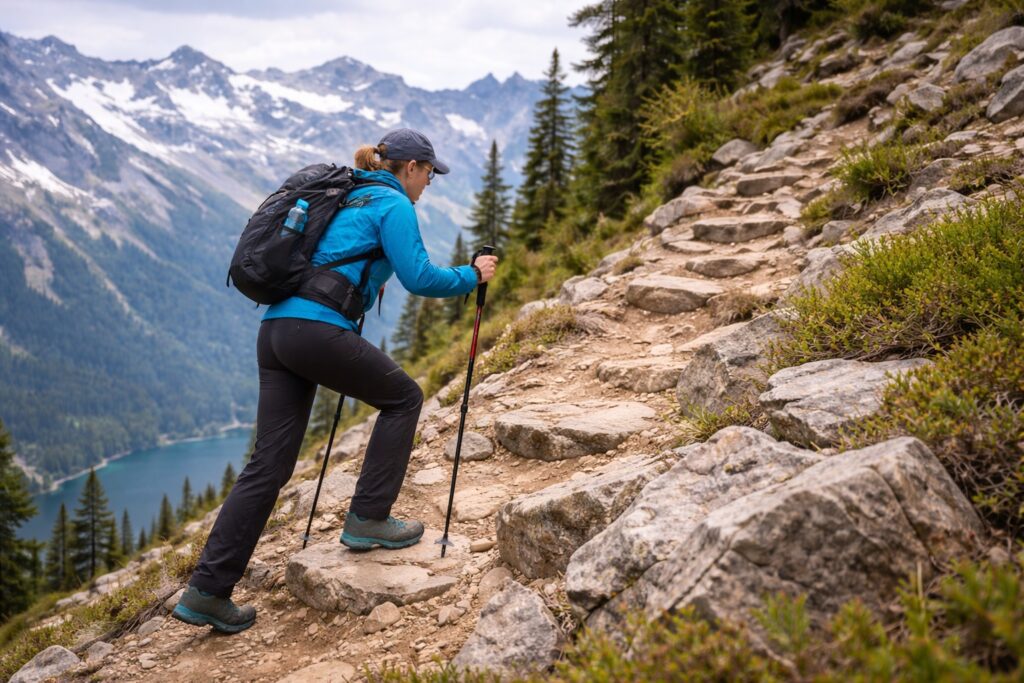
Using Trekking Poles on Uphill Terrain
Uphill travel is where trekking poles start sharing workload with your legs instead of simply providing balance—especially on longer or sustained climbs. When used correctly, they help distribute effort across your upper body and smooth forward momentum.
Adjusting Pole Length for Uphill Terrain
On climbs, trekking poles are usually more effective when set slightly shorter than your flat-ground length. Shortening the poles allows for a more natural arm swing and helps prevent overreaching in front of your body.
If you’re unsure how much to shorten them, this is covered in detail in the adjust trekking pole length for uphill terrain section of the length guide.
A simple rule of thumb:
If your shoulders feel tense or your elbows lock out on every plant, the poles are probably too long for the grade.
Plant Timing and Movement Rhythm
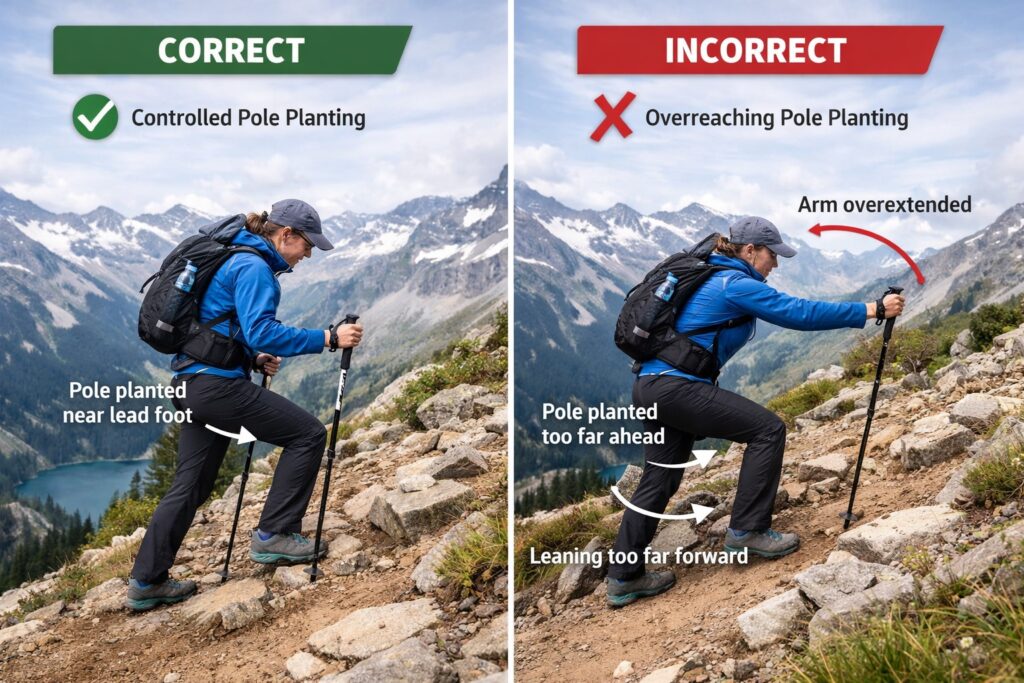
Effective uphill pole use is less about force and more about timing. Poles should plant near or slightly behind your lead foot—not far out in front.
Focus on:
Short, controlled pole plants
Letting pole movement match your step cadence
Keeping elbows softly bent rather than rigid
The goal is rhythm, not leverage. Poles act as stabilizers and momentum smoothers—not crutches pulling you uphill.
Common Uphill Trekking Pole Mistakes
Many uphill issues come from trying to “power” climbs with poles instead of using them to maintain balance and flow. This usually shows up late in the day, when fatigue starts influencing technique.
Common problems include:
Poles set too long for the slope
Planting too far ahead of the body
Locking elbows and shoulders
Gripping handles too tightly
These are covered in depth in common uphill trekking pole mistakes, along with practical corrections.
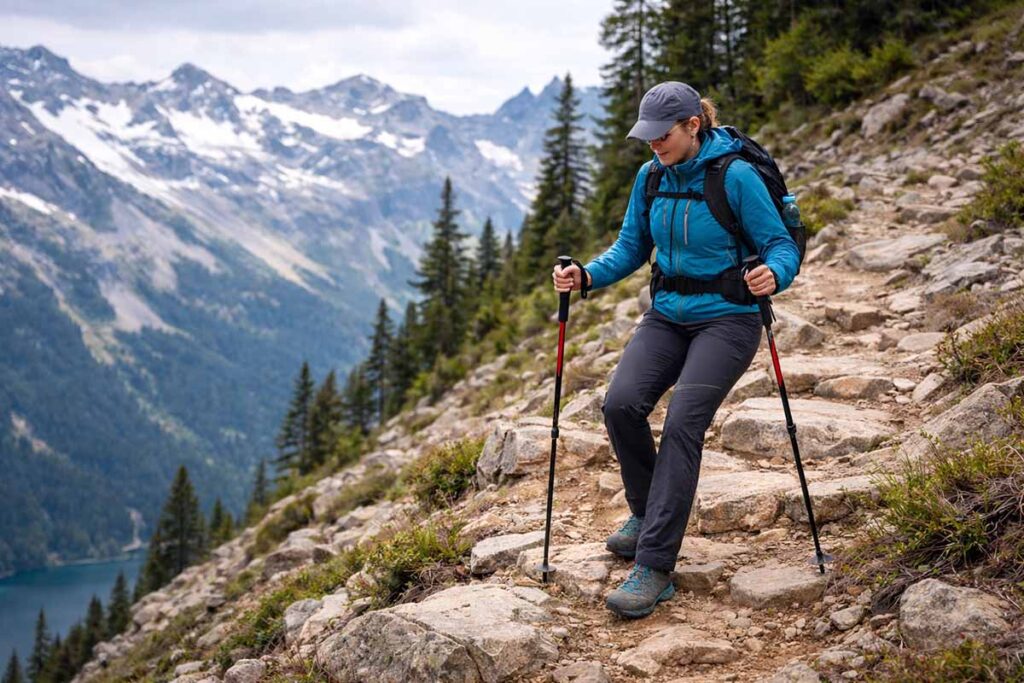
Using Trekking Poles on Downhill Terrain
Downhill terrain places very different demands on your body—and on your trekking poles. Descents generate higher impact forces and place more stress on knees, wrists, and shoulders.
This is where technique matters most—and where mistakes tend to show up fastest.
Why Downhill Travel Is Harder on Your Joints
Every step downhill increases braking forces through the knees and hips. Trekking poles help by:
Absorbing part of the downward load
Improving balance on uneven footing
Reducing sudden weight shifts during slips
Used incorrectly, however, poles can shift stress to the wrists or elbows instead of relieving it.
Wrist Straps: When to Use Them (and When Not To)
Wrist straps are often misunderstood on descents, even by experienced hikers. When used correctly, they allow your arms—not your grip strength—to support part of your weight.
General guidance:
Use straps to support downward pressure
Avoid death-gripping the handles
Adjust strap height so your hands can stay relaxed
Improper strap use is one of the most common causes of wrist discomfort on long descents. This will be covered fully in proper trekking pole wrist strap use.
Lock Strength and Impact Forces on Descents
Downhill terrain places repeated impact loads on trekking pole locks. Each plant acts like a controlled impact, especially on rocky or uneven trails.
This is why secure locking mechanisms and reliable shaft stiffness matter more on descents than on climbs. A pole that feels perfectly fine uphill may reveal weaknesses once it’s used to brake downhill momentum.
Uphill vs Downhill: Key Differences at a Glance
| Aspect | Uphill Use | Downhill Use |
|---|---|---|
| Pole Length | Slightly shorter | Often slightly longer |
| Primary Benefit | Rhythm and momentum | Joint protection and stability |
| Plant Location | Near or behind lead foot | Slightly ahead for braking |
| Joint Stress | Lower overall | Higher on knees and wrists |
| Common Errors | Overreaching, locking arms | Overloading wrists, weak locks |
These differences explain why a technique that feels fine uphill can feel awkward—or even harmful—once the trail turns downhill.
When Poles Help — and When They Get in the Way
Trekking poles aren’t always beneficial. On very steep scrambles, narrow ledges, or terrain that requires frequent hand use, poles can reduce mobility instead of improving it.
Knowing when you should not use trekking poles is just as important as knowing how to use them. Situational awareness and adaptability usually matter more than rigid technique.
What to Look for in Trekking Poles for Steep Terrain
When hiking consistently steep terrain, pole characteristics matter more than brand names.
Key features to prioritize:
Secure locking systems that hold under downhill load
Comfortable grips that reduce hand fatigue
Adjustable length for changing slope angles
Balanced shaft stiffness—not overly flexible or harsh
If you’re evaluating options, start with trekking poles designed for steep terrain rather than focusing on weight alone. Performance on climbs and descents depends more on control and reliability than on shaving grams.
Putting It All Together on Steep Terrain
Trekking poles aren’t just accessories. They change how your body manages load, balance, and impact—especially when the trail gets steep.
On uphill and downhill terrain, small adjustments in pole length, timing, and hand position make a noticeable difference in comfort and control. When technique matches the slope, poles work with your natural movement instead of fighting it.
Used intentionally, trekking poles become part of your stride—rather than something you have to think about with every step. The result is smoother movement, less joint stress, and more confidence when terrain stops being forgiving.